Brand Logo
Brand Logo
Top 10 Must-Visit Tourist Places in Khajuraho

Top 10 Must-Visit Tourist Places in Khajuraho

Have you ever been to one of those tourist places where you arrive with just a vague idea of what to expect and then the place completely surprises you? This is the same surprise that many travelers experience when they first land in Khajuraho.


At first, it might seem like just another small town in Madhya Pradesh, quiet and modest. But the moment you travel closer to Khajuraho’s nearby tourist places, like its ancient temples, something shifts. The intricate carvings, the timeless architecture, and the stories etched into stone slowly lead you to explore more about the rich history hidden within every sculpture and structure.


And the best part is you don’t have to worry about where to stay; by staying at The Lalit Khajuraho, you can comfortably explore all these breathtaking attractions while soaking up a relaxing and luxurious retreat after a day of sightseeing.


Also Read: Luxury & Pride: The Ultimate Gay-Friendly Stay at The LaLiT Temple View Khajuraho


Explore Khajuraho’s Tourist Places While Staying at The Lalit Khajuraho


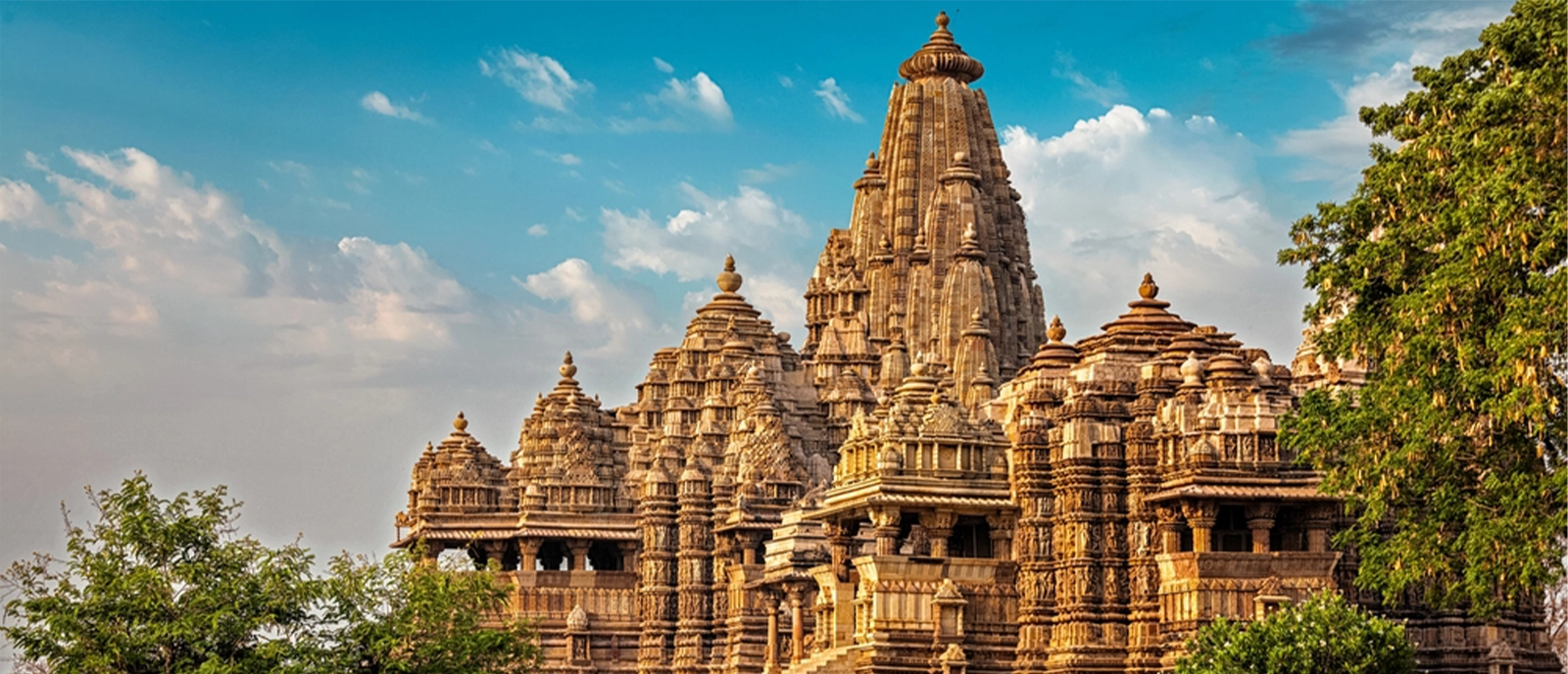
Khajuraho is a UNESCO World Heritage Site in India known for its stunning Chandela-era temples adorned with intricate, erotic, and spiritual carvings.


If you’re planning a trip to Khajuraho, here are the top 10 places near it that you must include on your itinerary. These are the true representations of the best of Indian architecture and nature.


1. Kandariya Mahadeva Temple


This is the largest and most iconic temple of the Khajuraho complex, dedicated to Lord Shiva with thousands of intricate carvings. This temple was inscribed on the UNESCO World Heritage List in 1986.


  • Significance: It symbolizes the cosmic mountain (Kailash) and represents the union of divine and human energy.
  • History: It was built around 1025-1050 CE by Chandela King Vidyadhara to honor Shiva.
  • What you can do: You can enter the dark, intimate sanctum (Garbhagriha) to see the Shiva Lingam, admire the 846 carved figures, walk around the mandapa, and attend the evening light‑and‑sound.


Also Read: Top Temples to Visit in Khajuraho: A Spiritual Journey Through Time


2. Lakshmana Temple


One of the oldest surviving temples from the 10th century in Khajuraho, dedicated to Lord Vishnu. People around the world come to witness its intricate, detailed carvings, erotic sculptures, and four-headed Vishnu idol. 


The main purpose of building this temple was to house a sacred, precious idol of Vaikuntha Vishnu that Yashovarman received from a competitor, establishing his own power and legitimacy.


  • Significance: Showcases detailed friezes depicting daily life, battles, and famous, artfully executed erotic sculptures. It set the template for later Khajuraho temples.
  • History: It was built by the Chandela ruler Yashovarman (or Yashovarman) between c. 930–950 CE. 
  • What you can do: You can explore the images of loving couples known as mithuna (literally “the state of being a couple") that appear on the Lakshmana temple as symbols of divine union and moksha. You can go to nearby temples on a walking tour.


Quick Tip: Hire a local guide to explain the intricate narratives behind the sculptures.


Also Read: Top 10 Must-Visit Tourist Places in Khajuraho


3. Devī Jagadambā Temple


A grand temple dedicated to the Mother Goddess (Devi), with finely detailed carvings, including mythical beasts and celestial beings.


  • Significance: Embodies the divine feminine and cosmic creation.
  • History: Built by the Chandela Dynasty rulers between 950 and 1050 CE as part of the western temple group.
  • What you can do: You can witness the intricate carvings, particularly the three bands of intricate erotic sculptures, and attend the evening light and sound show near the Western Group of temples.


4. Chaturbhuj Temple


This temple is dedicated to Lord Vishnu (four-armed); it offers explorers like you a blend of historical exploration, stunning panoramic views, and spiritual ambiance.


  • Significance: Represents Vishnu as the preserver of the universe. (Chaturbhuj translates to "one with four arms.").
  • History: It was built by the Bundela Rajput kings (Raja Madhukar Shah and Vir Singh Deo) in the 16th/17th century during the reign of Mughal Emperor Akbar.
  • What you can do: Circle the temple complex, and climb the steep stairs to the main temple area to see the idol. You can also participate in or watch celebrations during Janmashtami.


5. Chausath Yogini Temple (Also Known as Ekattarso Mahadeva Temple)


It is dedicated to 64 Yoginis (female tantric deities) and the Mother Goddess, and it is located on a rocky outcrop in the western‑group area. These Yoginis were believed to embody powerful cosmic energies and esoteric spiritual forces.


  • Significance: Symbolizes the cult of the Yoginis, female tantric practitioners or goddesses
  • History: Built by King Devapala (c. 1055–1075).
  • What you can do: Admire the unique circular structure, walk around the open courtyard, and imagine the original arrangement of 64 deities.


6. Dulhadeo (Dulhadev) Temple


It is also known as Kunwar Math. Its name is thought to derive from “Dulha Deo” (translates to "HolyBridegroom"), showcasing local legends and folk traditions. It is one of the last shrines built in the southern wing of the Khajuraho Temples.


  • Significance: It is dedicated to Lord Shiva.
  • History: Believed to have been built between 1000 and 1150 AD, during the Chandela dynasty.
  • What you can do: Admire the carvings and stunning architecture.


7. Raneh Falls & Dam


It is located 20 km from Khajuraho on the Ken River in Madhya Pradesh. It forms a 30-foot-deep canyon with dazzling crystalline granite, attracting a large number of nature enthusiasts and birdwatchers.


  • Significance: It showcases the region’s geological beauty.
  • History: Geologists believe the canyon was formed by volcanic activity millions of years ago.
  • What you can do: Sightseeing numerous waterfalls (best after monsoon, Sep–Nov) and the breathtaking gorge, you can explore rocky terrain along the canyon edges.


If you are a wildlife explorer, you can visit the nearby Ken Gharial Sanctuary to spot crocodiles.


8. Khajuraho Archaeological Museum


This museum houses rescued sculptures, broken temple fragments, and loose sculptures from the UNESCO-listed Khajuraho temples.


  • Significance: Preserves hundreds of broken or displaced statues.
  • History: It was first established in 1910 by W. E. Jardine.
  • What you can do: Examine the detailed, close-up stone craftsmanship and learn about the history and construction techniques.


9. Panna National Park (Near Khajuraho)


It is A wildlife sanctuary and tiger reserve located 57 km from Khajuraho. Panna National Park is famous for its dramatic recovery from zero tigers in 2009 to over 50 at present.


  • Significance: Protects tigers, leopards, sloth bears, and many bird species.
  • History: Declared a National Park in 1981.
  • What you can do: You can add a nature‑adventure angle to a Khajuraho trip, visit the ancient "City of Temples" (Panna) for Neolithic stone paintings, and go sightseeing at the scenic Raneh Falls and Pandav Falls.


10. The LaLiT Temple View


The LaLiT Khajuraho is a premier 5-star hotel located just 500 meters from the UNESCO World Heritage Western Group of Temples, offering easy access to the main tourist area.


  • Significance: The Lalit Temple View Khajuraho offers the ideal gateway to this ancient city.
  • Key Features: It is a 9-acre estate that features rooms and areas with direct views of the ancient, historic temples, giving you the panoramic views. It operates 47 rooms and suites and offers over 2,400 square feet of conference and banqueting space.
  • What you can do: Explore The AUM Shop, Dine at the "Panna" restaurant (serving international cuisine) or visit the "Mahua" bar. You can witness the interior design elements, including a "wall of whispers" featuring, caricature-style interpretations of the erotic sculptures


What People Say About The LaLiT Khajuraho


“Really enjoyed my short stay at The LaLiT. The hospitality, ambience, food & services have been excellent! Thank you; I hope to come again!" —Rahul Dravid Indian Cricketer


Many people, when exploring the history, stay at The LaLiT Khajuraho for our “Temple View” positioning. This makes it ideal for early‑morning temple visits and evening light‑and‑sound shows.


Ready to explore the timeless beauty and ancient artistry of Khajuraho with luxury and comfortable stays?


Contact us at: khajuraho@thelalit.com, Phone : +91 7686 272111, +91 99930 92600


Address: Opposite Circuit House, Khajuraho 471606. India Airport 6.2 km; Lakshman Temple 500 m


FAQs


Q1: What to see in Khajuraho in one day?
A: If your visit for one day only, then focus on the Western Group temples (Kandariya Mahadeva, Lakshmana, Vishvanath, Devi Jagadamba, and Dulhadeo/Dulhadev), add Raneh Falls for a scenic break


Q2: What are the Khajuraho tourist attractions?
A: Here are the main Khajuraho tourist attractions:

  • Western Group of Temples: Kandariya Mahadev Temple, the well-preserved Lakshmana Temple, Matangeshwar Temple, and the Varaha Temple.
  • Eastern Group of Temples: Parsvanath Temple (largest Jain temple), Ghantai Temple, and Vamana Temple.
  • Natural and Other Nearby Attractions: Raneh Falls, Panna National Park, Pandav Falls, State Museum of Tribal and Folk Art, and Kalinjar Fort.


Q3:What are the places to visit in Khajuraho at night?
A:You can visit the immersive Light and Sound Show at the Western Group of Temples, highlighting the area's 1000-year-old history.

Found the blog helpful?

Editorial Team 2026-02-21

I'm glad to hear that you found the blog helpful! If you have any questions or need further assistance on any topic covered in the blog, feel free to ask. I'm here to help!

38
Preveous Post

Previous Post

Next Post

Next Post

//jQuery & jQuery UI